Four Experts, One Message: The Maritime Sector Is Under Cyber Attack
Four Experts, One Message: The Maritime Sector Is Under Cyber Attack
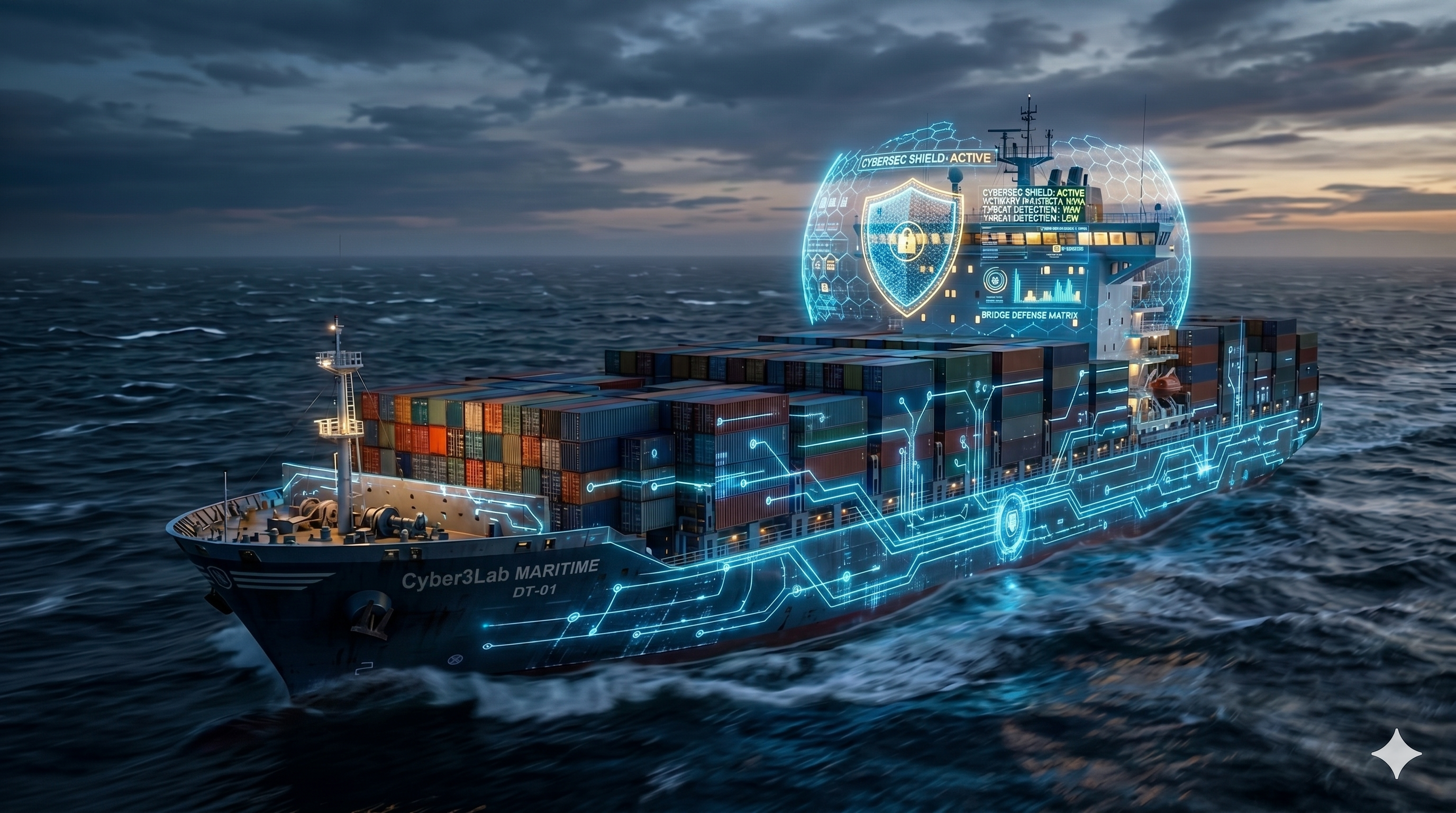
Over 80% of global trade moves by ship. As Admiral Tanguy Botman likes to say, "No Shipping, No Shopping". But ships get hacked, ports get ransomed, and navigation signals get spoofed. The maritime sector is under cyber attack, and most organisations are not ready.
On 11 May 2026, we welcomed a full room to Howest University of Applied Sciences in Bruges for our afternoon seminar, "Maritime Cybersecurity: A Reality Check". The goal was simple: we cut through the noise with hard data, real cases, and practical advice from people who work on this every day.
Four expert speakers took the stage. Each one answered a different question for the same audience. If you could not join us, here is the essence of what they shared. If you are interested in their presentations, send us an email.
Get in touch with our maritime cybersecurity experts!
Main section
Quick facts
/
Over 80% of world trade travels by sea: no shipping, no shopping
/
Transport is Europe's second most targeted sector
/
The Maritime Cyber Attack Database logs over 290 maritime cyber incidents across 54 countries since 2001
/
Individual vessels are exempt from the NIS2 directive, which leaves ships as the weakest link
/
Ships get hacked. Ports get ransomed. It happens every week.
Four speakers, four angles on the same urgent problem
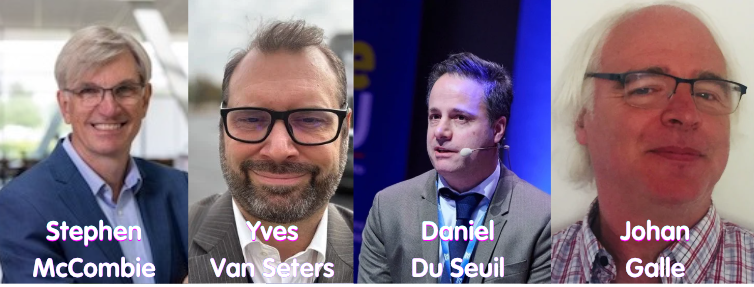
1. Stephen McCombie (NHL Stenden): Real-world Threats and Ship Honeynets
Stephen McCombie leads the Maritime IT Security Research Group at NHL Stenden. He opened with a sober picture of the sector. Many fleets are old, equipment is poorly maintained, and the level of cyber maturity is low.
He then walked us through real incidents. He started with the 2017 NotPetya attack that crippled Maersk, and moved on to modern GPS spoofing and jamming cases. To track this growing threat, his team built the Maritime Cyber Attack Database (MCAD). It is an open dataset that logs publicly known maritime cyber incidents and is free to use for research and policy.
The highlight of his talk was the Ship Honeynet project. The idea is to deploy decoy maritime systems, such as fake VSAT terminals, to attract and study real attackers. The team then feeds this threat intelligence into realistic incident simulations. Crews and executives use these simulations to practice how they respond when something goes wrong.
2. Yves Van Seters (Antwerp Maritime Academy): the Interconnected Maritime Ecosystem
Yves Van Seters widened the lens to the bigger picture. He drew a clear line between two ideas that people often mix up. Maritime safety is about protection from accidents. Maritime security is about protection from intentional harm, such as hacking or terrorism.
He explained that the maritime sector is now one of the most targeted industries in Europe. OT incidents and ransomware attacks are both rising. He also pointed to a clear regulatory gap. The industry is highly connected, but individual vessels are exempt from the NIS2 directive. That gap leaves ships as the weakest link in the transport system, because there are no explicit rules for them.
His answer is to build a cyber-safe maritime culture. The Antwerp Maritime Academy (AMA) works on research and on world-class human-cyber competence training to close the gap between people and technology.
3. Daniel Du Seuil (Blue Cluster): Protecting Critical Maritime Infrastructure
Daniel Du Seuil brought a strategic and industrial view from the Blue Cluster. His focus was Critical Maritime Infrastructure Protection (CMIP). This means protecting offshore energy, communications, and shipping, because all three are vital to the economy and to national defence.
He explained that this is now a national priority. Under the Flemish Innovation and Industrial Strategy for Security and Defence (VISD), millions are being invested to strengthen industrial defence capabilities.
He also shared the roadmap for a "Made in Belgium" defence ecosystem. The plan is to work across academia, government, and industry on innovations in permanent situational awareness, underwater detection, and digital cyber resilience. For companies and research groups, he framed this as a live opportunity, with early access to strategic priorities and a direct route into national and European projects.
4. Johan Galle (Howest Cyber3Lab): Education and OT Assessments
Johan Galle closed the afternoon by showing how Howest helps to close the cybersecurity skills gap. He described the full education path, from the Bachelor in Cybersecurity to Lifelong Learning programmes such as the "Masterclass in Industrial Security". That masterclass teaches professionals how to secure industrial control systems and how to work with industrial protocols.
He also stressed why OT cybersecurity assessments matter right now. IT and OT systems are converging, communication protocols are being standardised, and NIS2 asks for continuous asset monitoring. Together, this means that organisations can no longer leave their OT networks unwatched.
Howest supports this shift through research, services, and hands-on lab environments such as the CyberRange.
Bottom section
The takeaway, and where to learn more
The clear message from the afternoon was this: the era of security through obscurity at sea is over.
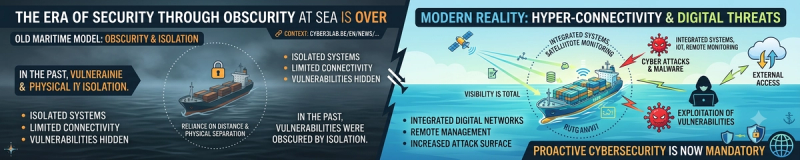
Ships are now floating industrial networks. Just like with factories, we need to bridge the gap between IT and OT to defend our ships, share threat intelligence openly, and build a united, well-trained ecosystem.
This is exactly the kind of expertise we have, and work we do at Howest Cyber3Lab, where our OT and ICS expertise meets real regulatory frameworks. If maritime or industrial cybersecurity matters to your organisation, we would be glad to talk.

This seminar was part of the Vertiports project, sponsored by VLAIO and POM West-Vlaanderen, and co-financed by the European Union.
Best resources on this topic
- Maritime Cyber Attack Database (MCAD), the open dataset behind much of the data shared at the event: https://maritimecybersecurity.nl/
- NHL Stenden Maritime IT Security Research Group, including the Ship Honeynet and simulation work: https://github.com/NHLStenden-MITS
- NHL Stenden MCAD project page: https://www.nhlstenden.com/en/maritime-cyber-attack-database
- IMO maritime cyber risk management, Resolution MSC.428(98) and the guidelines in MSC-FAL.1/Circ.3 "Guidelines on Maritime Cyber Risk Management"
- IACS Unified Requirements E26 and E27:
- NIS2 Directive (EU 2022/2555), the EU baseline for network and information security
- Antwerp Maritime Academy, with 3 webinars on maritime cybersecurity:
- Webinar 1 - The Rising Threat of Spoofing and Jamming
- Webinar 2 - Maritime Cyber Threats Are Rising
- Webinar 3 - Cyber Threat Intelligence CTI From Concept
- Blue Cluster (De Blauwe Cluster), on the Flemish maritime security agenda
- The Vertiports project, which aims to stimulate research and concrete applications for the creation of drone air corridors - enabling sustainable, continuous, and structural long-distance transport via so-called vertiports (landing and take-off platforms).

Contributors
Authors
/
Patrick Van Renterghem, Community Builder @Cyber3Lab (AI + CyberSecurity + Web3 + Immersive Tech)
Want to know more about our team?
Visit the team page
Last updated on: 7/1/2026
/